BEEV — Renovation of a modernist house by Paul Neefs
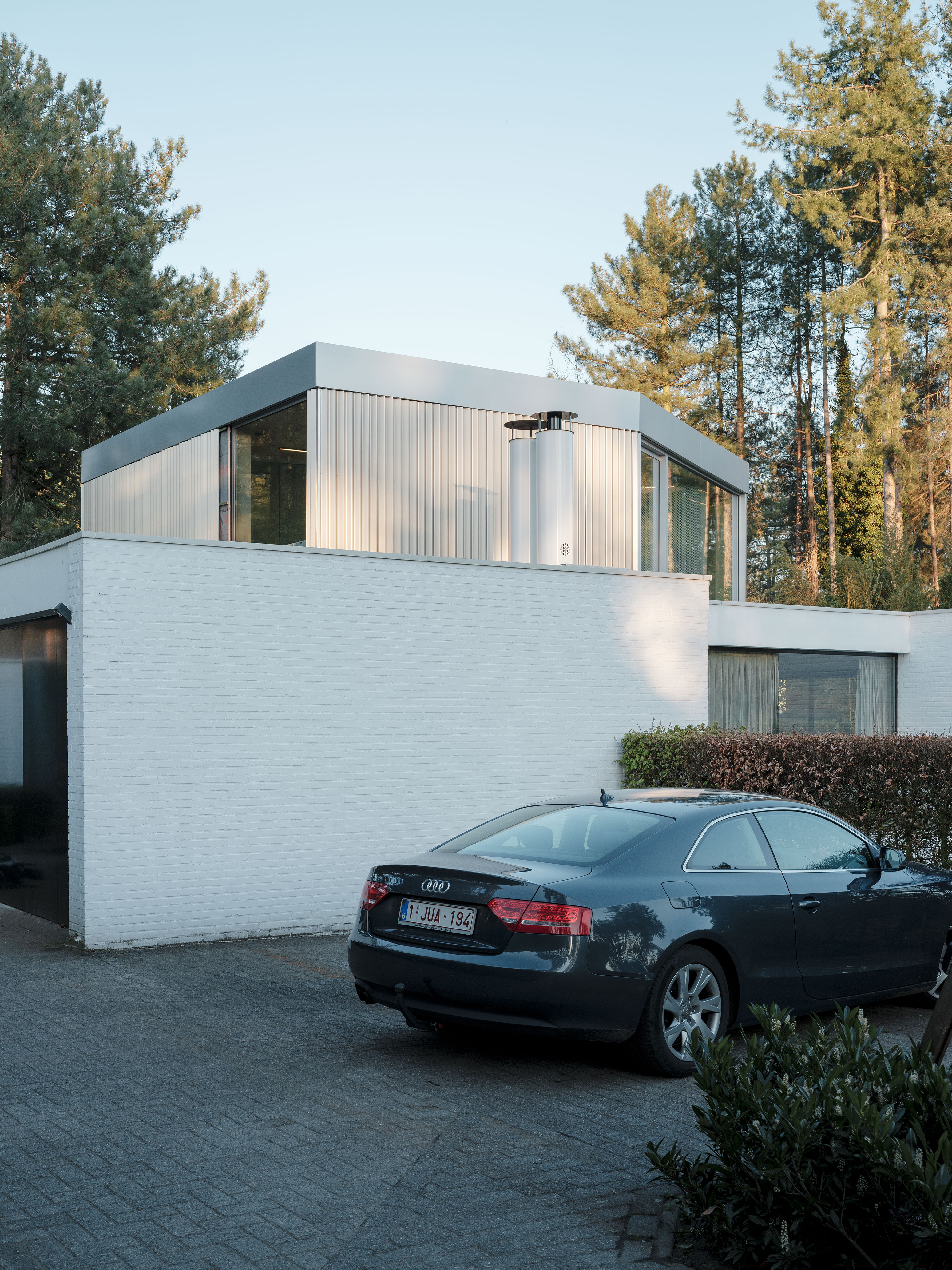
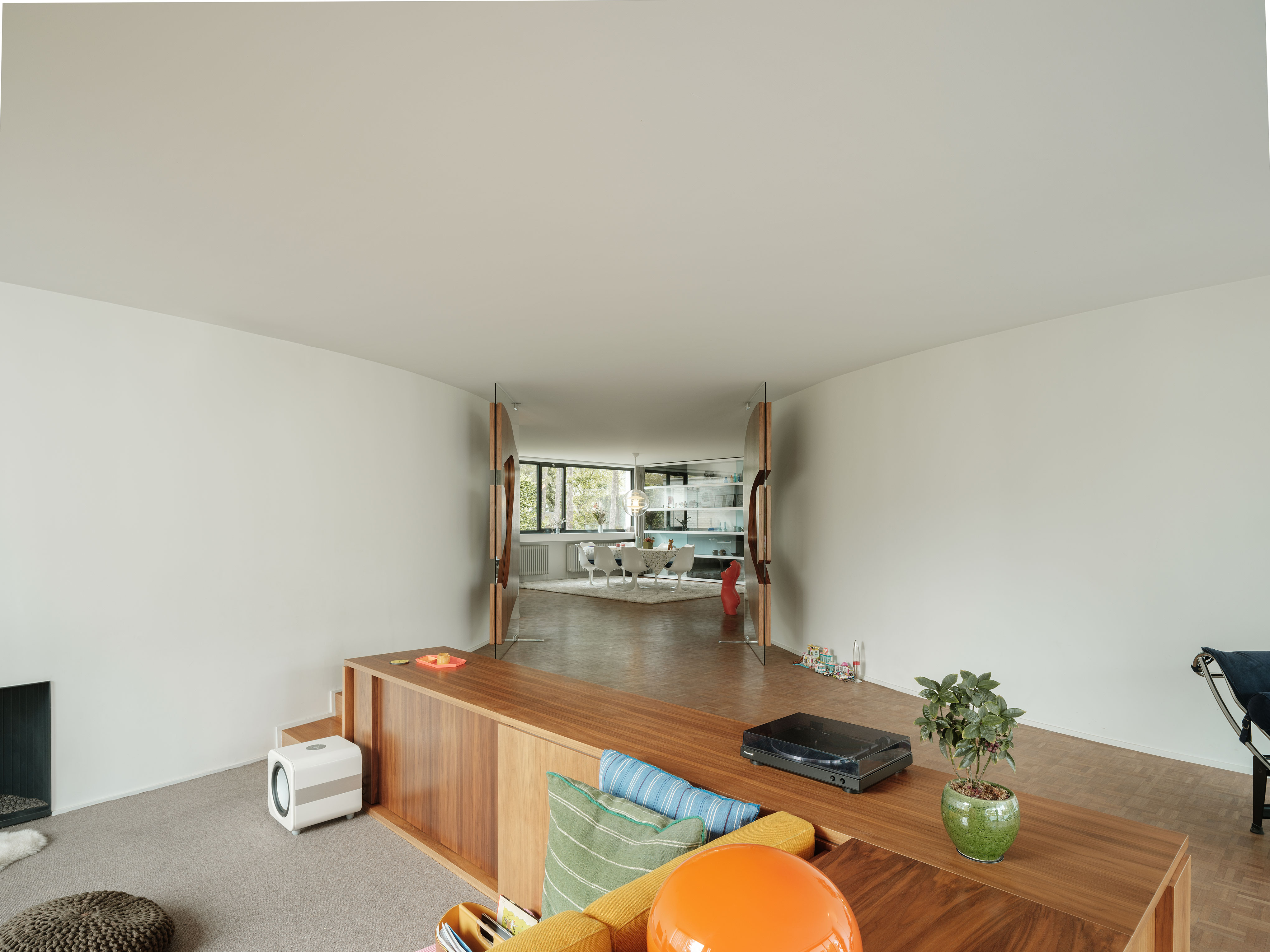
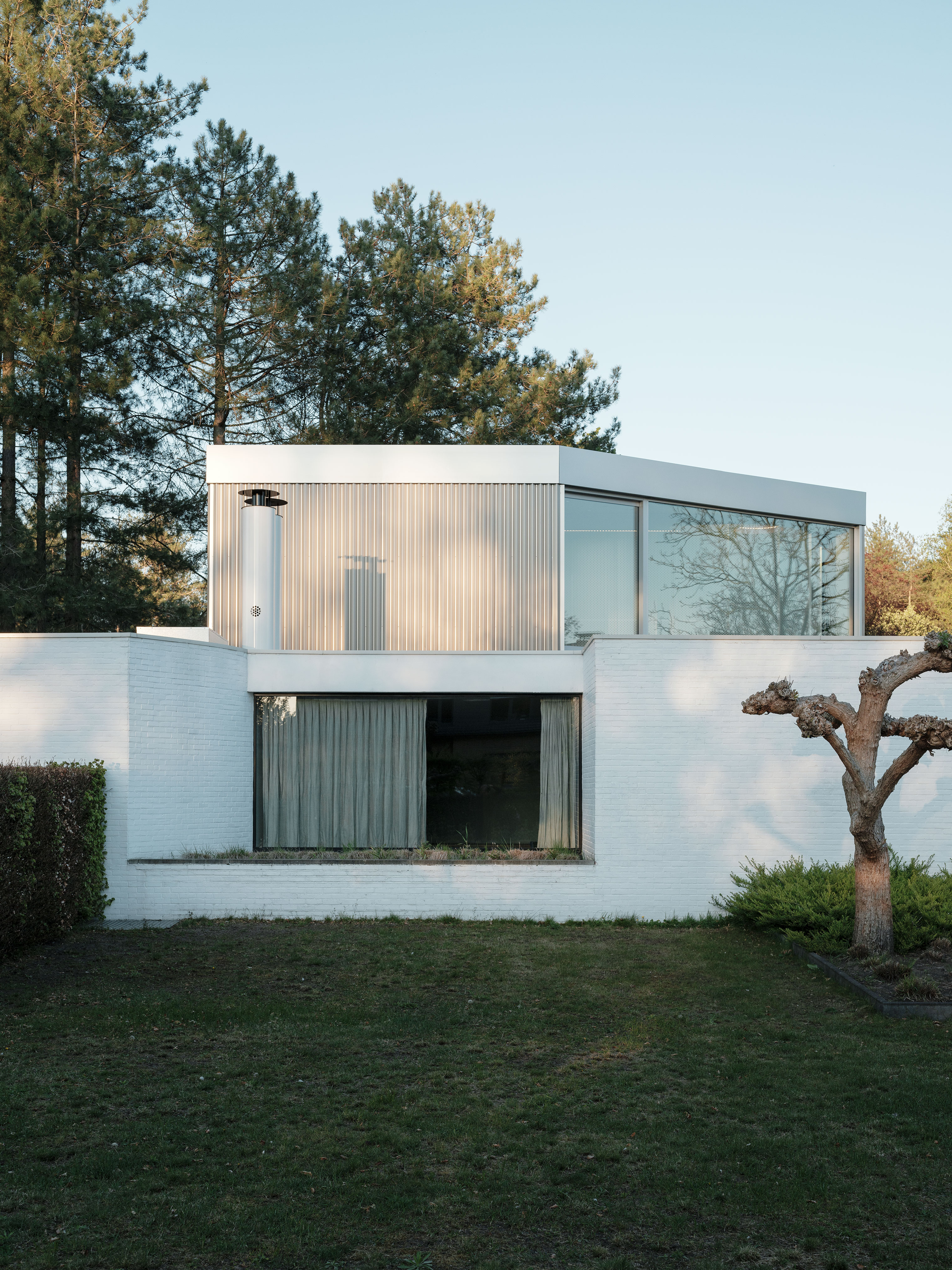
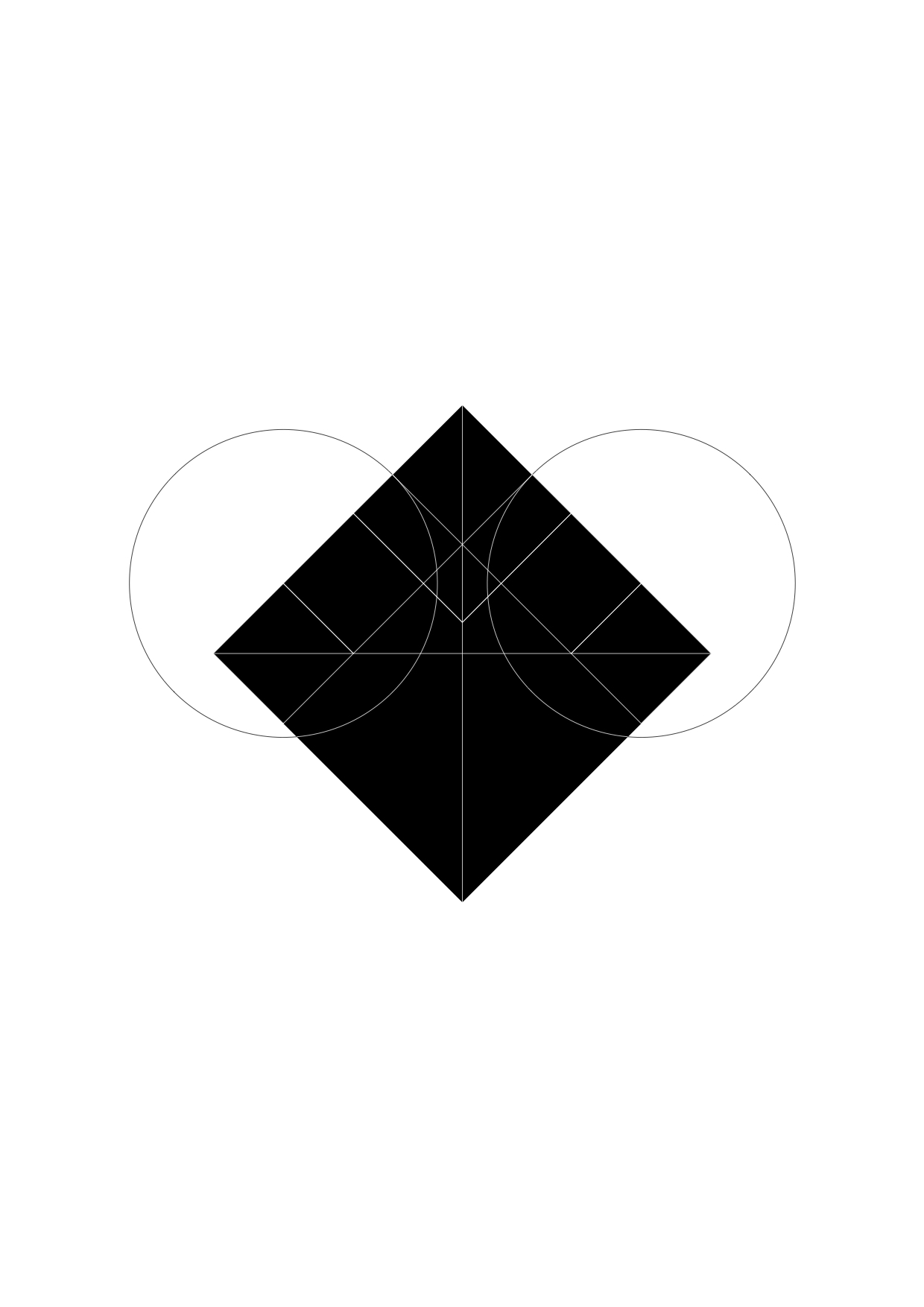
The original design of this pronouncedly modernist single-storey house by Turnhout School architect Paul Neefs consists of a square of 16.5 x 16.5 m, with a central space that runs diagonally between two circle segments. These two curved walls define the generous open area where everyday life unfolds in close relation to the surrounding garden and landscape. The more elementary rooms — entrance, kitchen, office and bedrooms — are arranged along the outer perimeter, behind the curves.
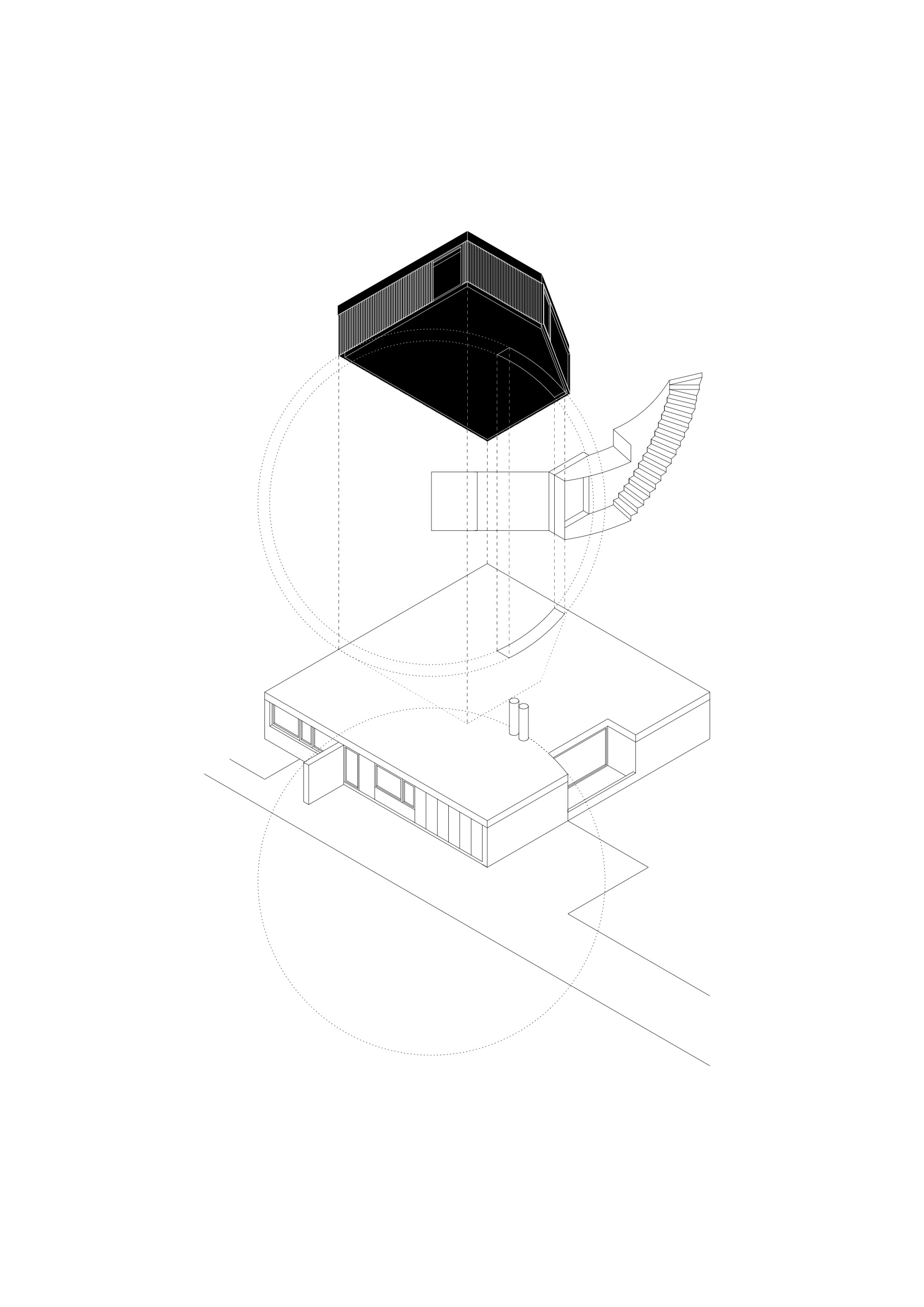
On the ground floor, we retained the original layout of the house and the pronounced geometric movements of the plan. The children’s bathroom was relocated, liberating one of the characteristic curves and creating room for a portal/staircase to the new floor.
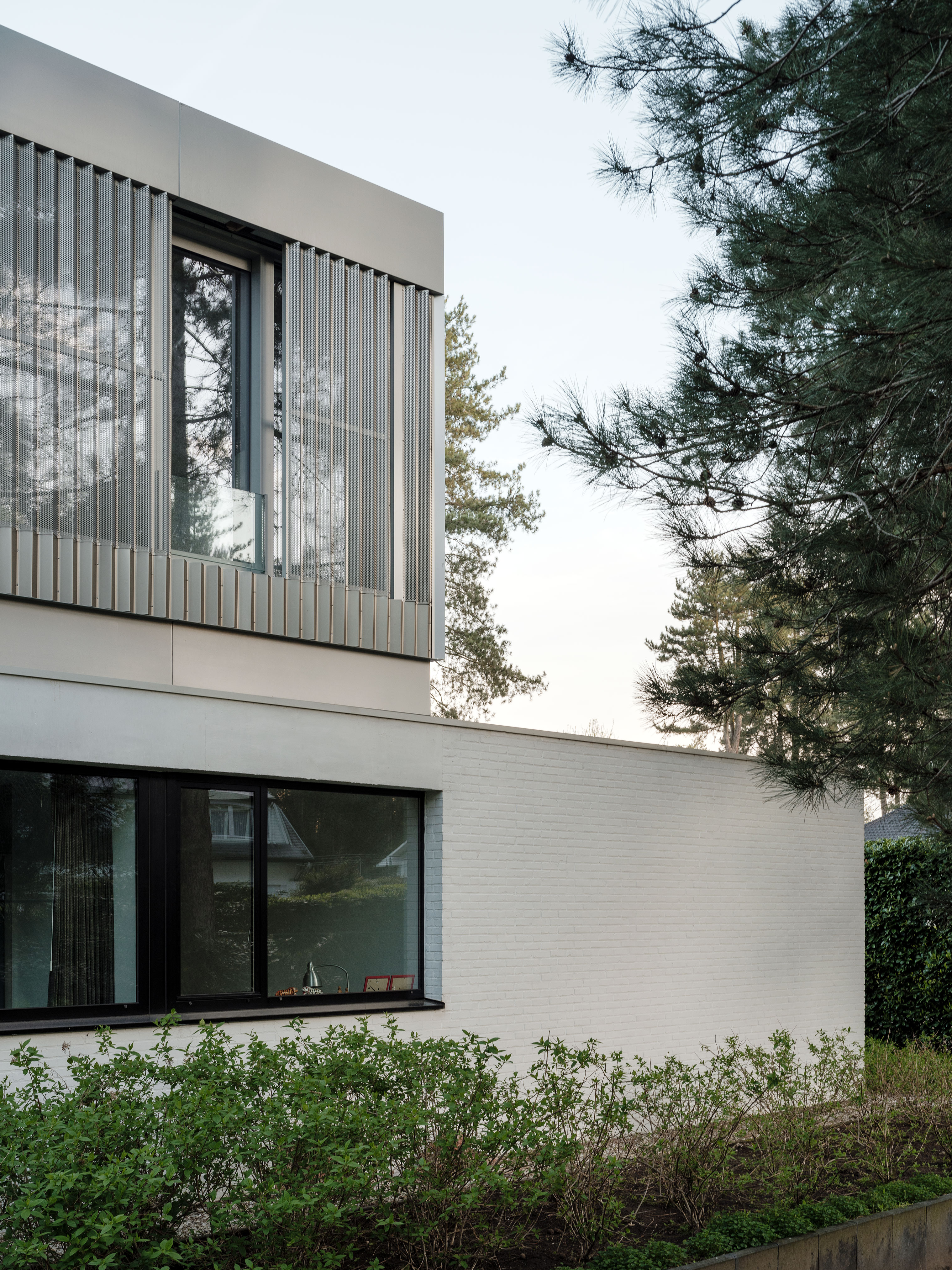
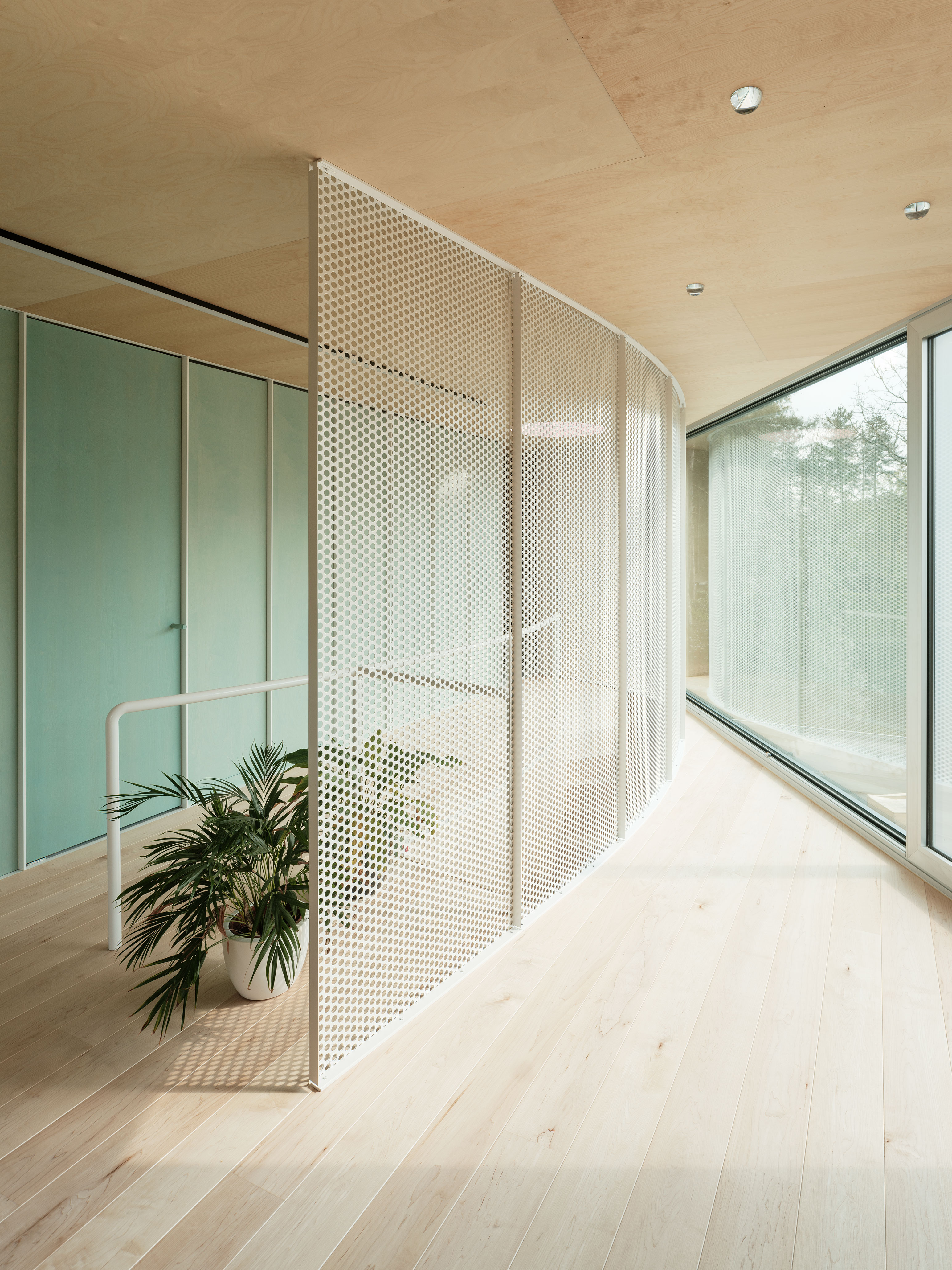
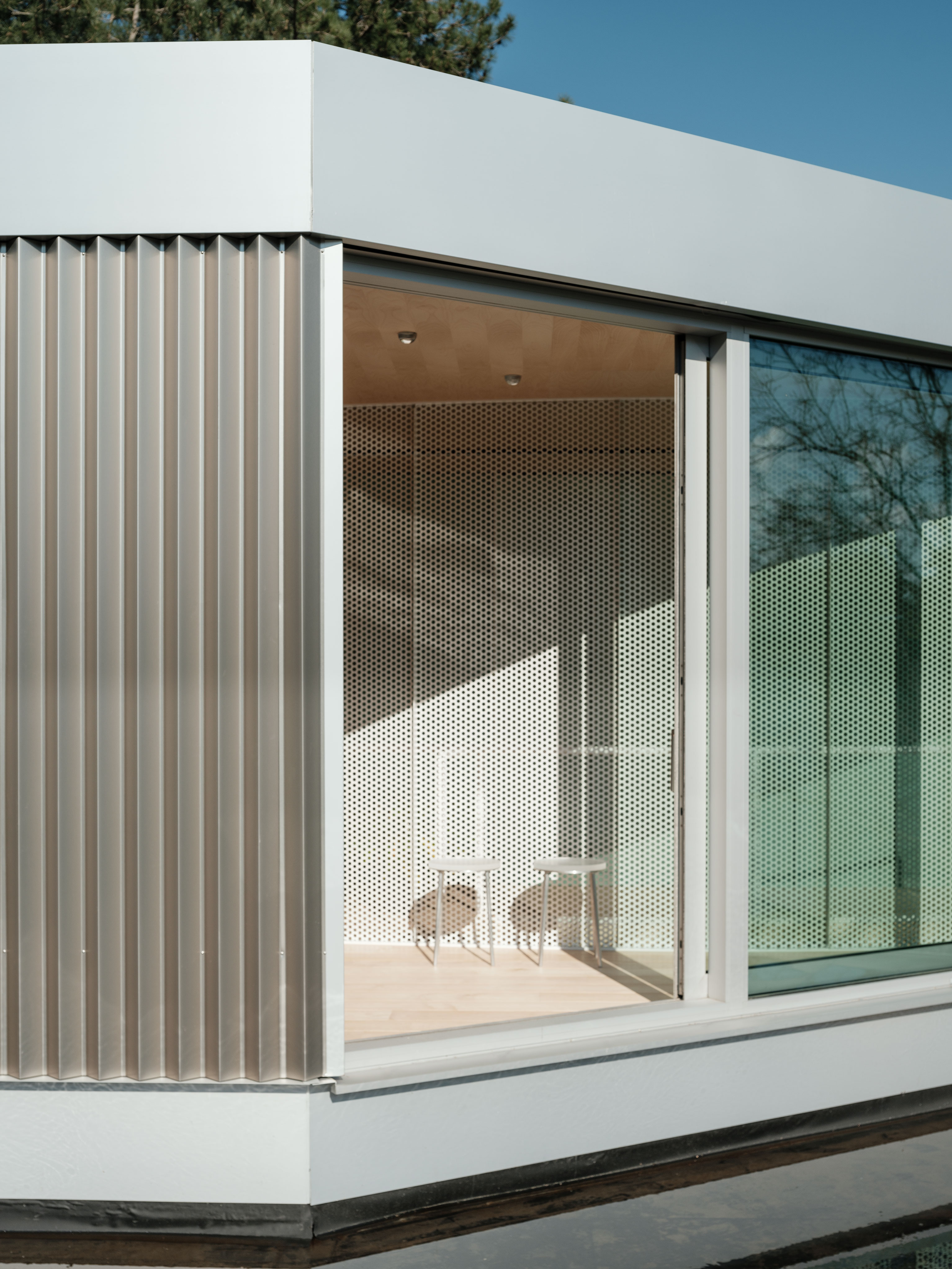
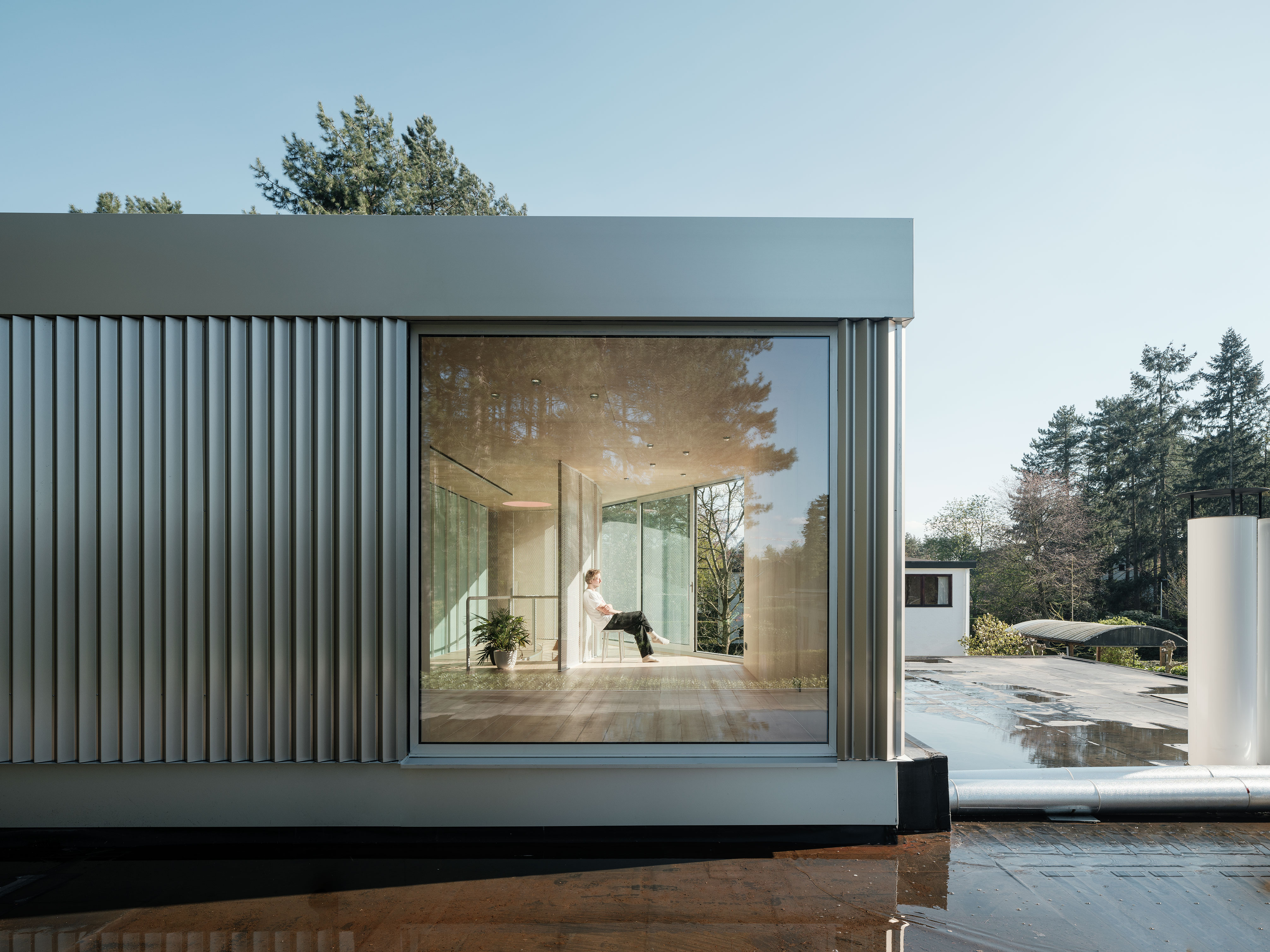
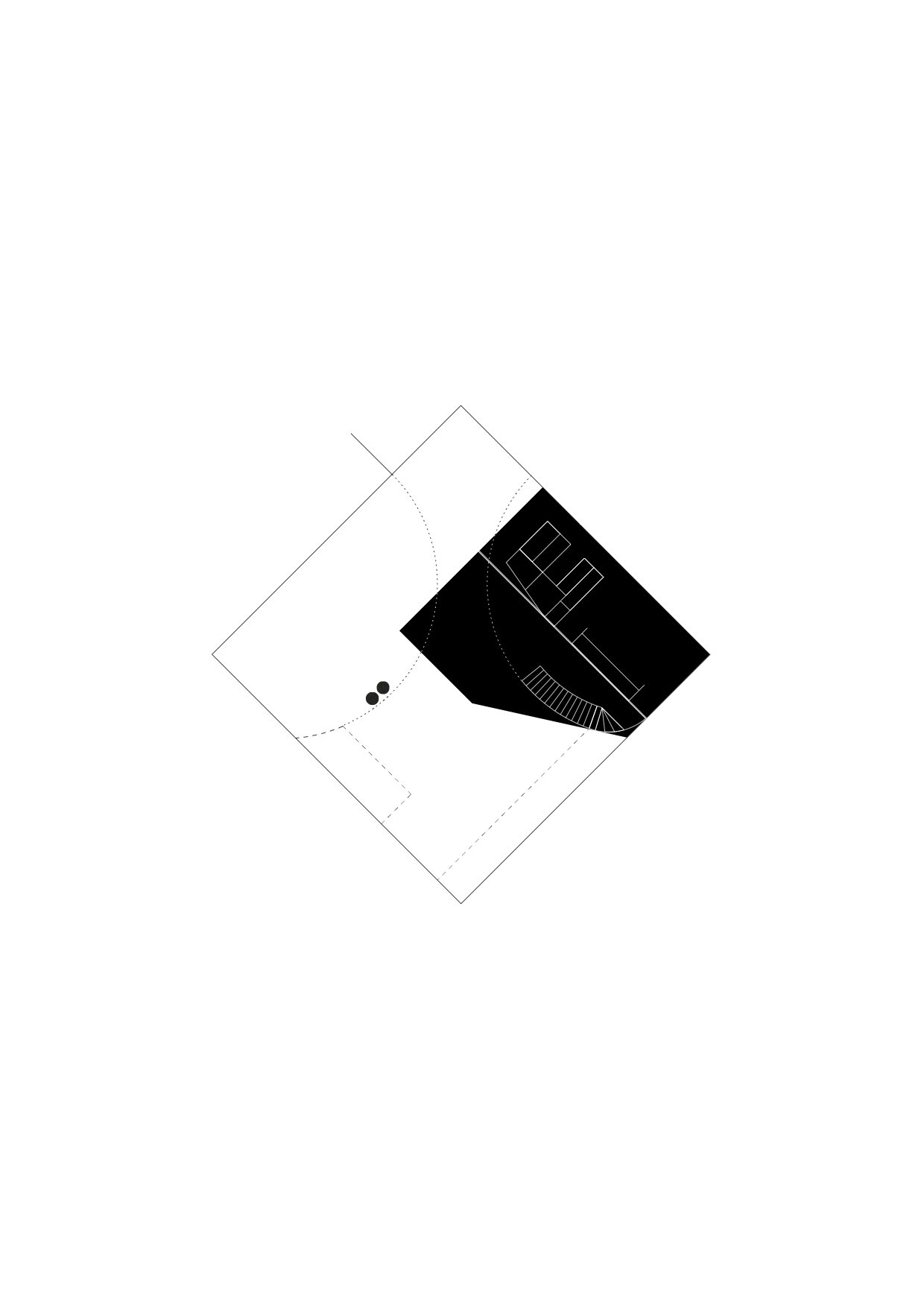
The volume on the roof reads as a self-evident, almost inconspicuous extension that elaborates on the compositional elements and rhythm of the original building. From the outside it inserts itself seamlessly into the existing logic. Inside, however, the architectural space is no longer the result of a single, unequivocal geometric concept; instead it consists of a scenographic collection of autonomous spatial elements. Where the modernist ground floor speaks from one coherent geometry, the roof develops a different language: an assemblage of independent components that together direct the spatial experience.
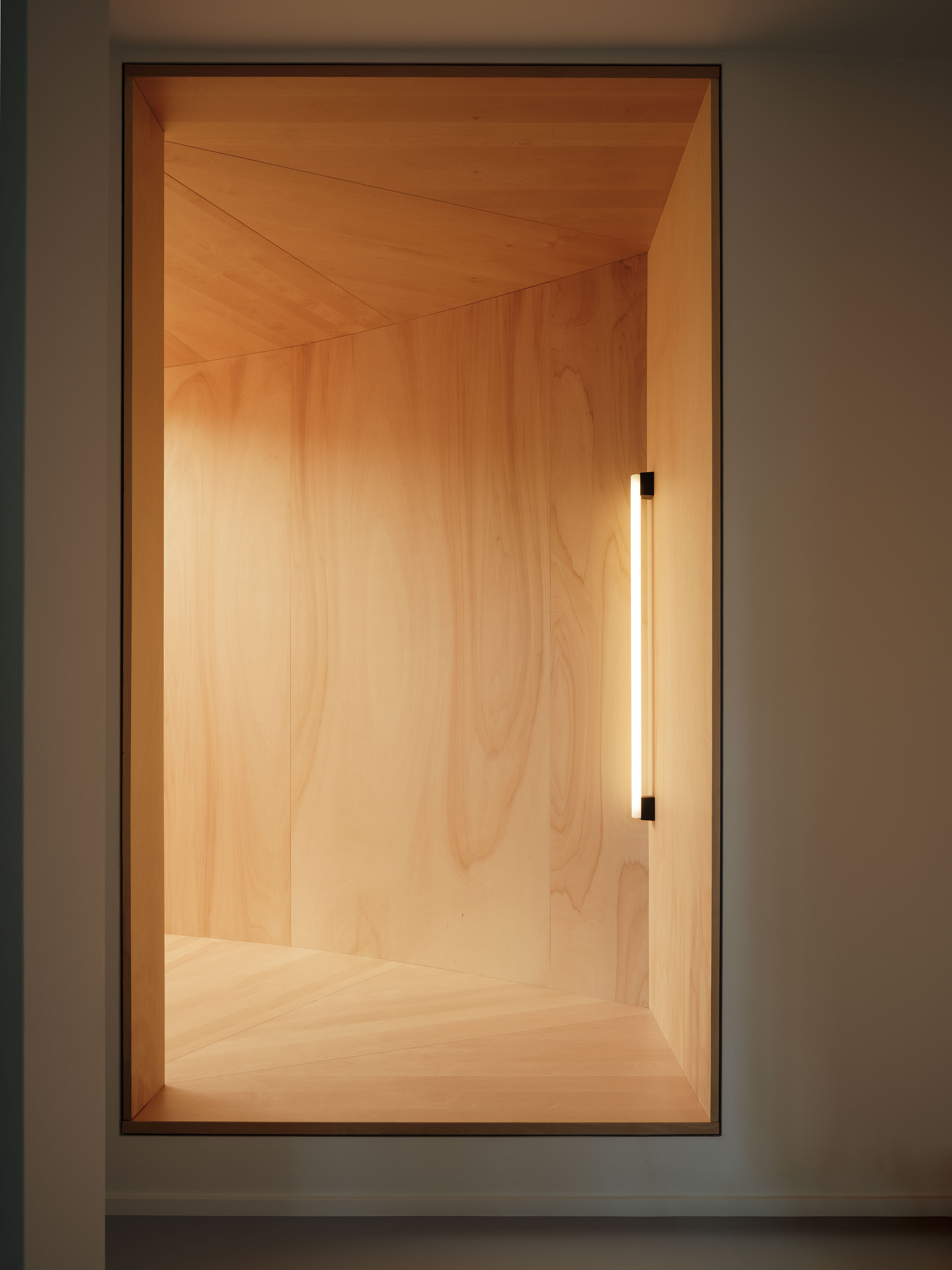
The transition between old and new is made via a staircase clad entirely in birch veneer, detailed with a deliberate step that marks the passage between the mathematical white geometry of the original building and the explicit materiality of the new addition. Once at the top, a floor-to-ceiling perforated screen guides movement through the space, conceived as an extrusion of one of the original curved walls. Seen at an angle, its perforations close optically into a solid surface that shields the space behind; seen straight on, they open up and the wall turns surprisingly transparent. Because it curves, no single reading holds across its whole length — opacity shades into transparency as you move and as the light shifts.
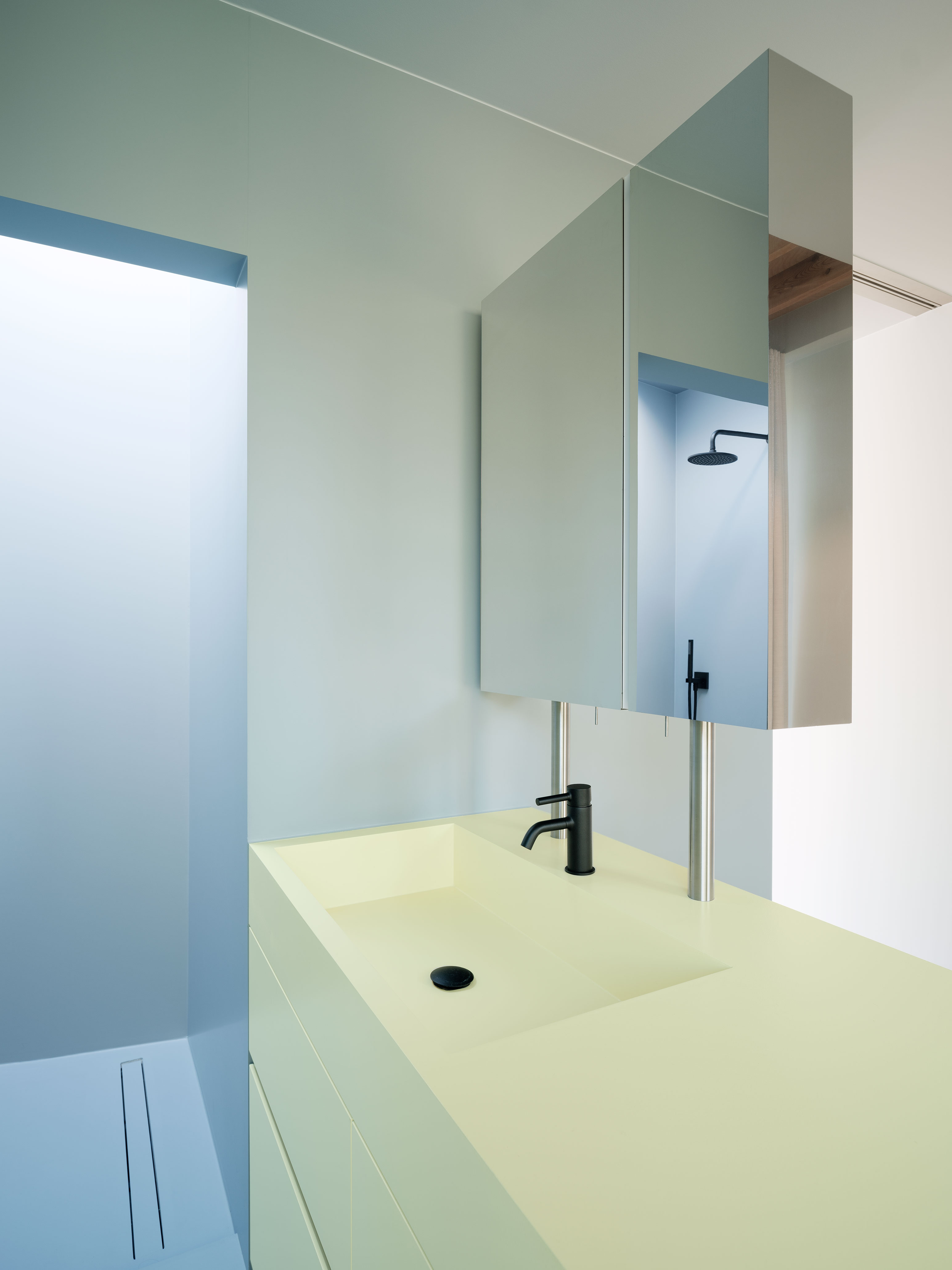
Two interior elements further articulate the new floor. A mint-green panelled plane acts as a “thick” threshold — folding at one point so that an infinitely thin border gains depth, simultaneously separating and connecting the anteroom and the sleeping zone. Set against it, a post-it-yellow bathroom volume stands as a freestanding, sculptural object that claims centrality in the plan. Less a fixture than an apparition, it turns the everyday act of washing into an almost ritual event and anchors the composition of the upper floor.
In this way, the intervention engages Neefs’ modernism not by imitation but by counterpoint. The exterior continues the original logic, while the interior sets a deliberately different spatiality against it — autonomous, scenographic and tactile. The result is a dialogue between two architectural languages, in which old and new remain legible as distinct voices precisely because they refuse to merge entirely.
Featured in our book
SPECIAL MENTION by the jury of the HERSUS Prize on Modern Heritage on the category Practice
Beerse(BE)
2021
Private
Renovation of a modernist house by Paul Neefs